|

Francisco
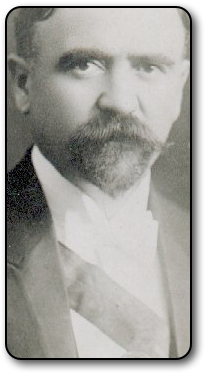
Ignacio Madero was the leader of Mexico's 1910 Revolution and
the democratically elected President of Mexico from 1911 until
1913, when, in a violent coup, his government was overthrown
and he was murdered. Today Madero is best remembered as the "Apostle
of Democracy," the visionary leader who overthrew Porfirio
Díaz, the dictator who had ruled Mexico, both directly
and indirectly, for more than three decades.
Less known is that Madero was also one of Mexico's leading Spiritists
and a medium. Not only did he maintain an extensive correspondence
with Spiritists in France and Mexico, but he was a organizer
of Latin America's first and second Spiritist Congresses held
in Mexico in 1906 and 1908, respectively, and it was after the
latter that he took upon himself the task of writing and publishing
the ardently evangelical Spiritist
Manual,
albeit under the pen name, "Bhima."
Although for
several decades following the Revolution, historians tended to
underplay or even ignore Madero's Spiritism not to mention
his role as Spiritism's Maecenas in recent years, Mexican
historians Enrique Krauze, Yolia Tortolero, and Manuel Guerra,
among others, have shown that Madero's Spiritist beliefs and
the messages he channeled as a medium inspired his first and
much better known book, La sucesión presidencial en
1910 (The Presidential Succession in 1910), which helped
spark the popular movement for the overthrow of Porfirio Díaz.
His channeled messages also inspired his decision to launch the
Revolution of 1910.
Born in 1873
into a wealthy family in Coahuila, in the north of Mexico, Madero
was the eldest of what would be a large family of 14 brothers
and sisters. Both his father and his grandfather, Evaristo Madero,
were leading landowners and industrialists and, from 1880 to1883,
the latter served as Governor of the state. Though Madero's father
was a Spiritist, the other family members were Catholics, and
he was raised in this faith. At the age of 12 he was sent to
the Colegio Jesuita (a Jesuit school) in Saltillo; then, briefly,
St. Mary's College near Baltimore. On his return to Mexico, on
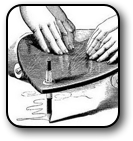
vacation, he and some friends played with a planchette, a piece
of heart-shaped wood, which, ostensibly taken over by spirits,
would point to letters on a board (such as a Ouiji) to spell
out messages. According to his biographer, Stanley Ross, "When
Francisco's turn arrived, the planchette spelled the reply that
Madero would be president of Mexico. This glimpse of the future
and its serious acceptance by Francisco produced great hilarity
among the adults present."
From 1887 until 1892, Madero studied in France, first at the
Lycée of Versaille and then in Paris, at the School of
Advanced Comercial Studies.By this time, he had lost his religious
beliefs. The year before his return to Mexico, Madero happened
upon some copies of the Spiritist organ, La Revue Sprite,
which had been founded by Spiritism's father, Hippolyte Léon
Denizard Rivail, who had taken the name Allan
Kardec,
after his name in an earlier reincarnation as a Druid. Avid to
read Kardec's works, Madero went straight to the Revue Sprite's
offices, which had a bookshop. In Madero's words (my translation),
"I did not read [Kardec's] books; I devoured them, for their
doctrines were so rational, so beautiful, so new, they seduced
me and ever since I consider myself a Spiritist."

In Paris, Madero attended various seances and met mediums who
told him he had the power to channel written messages. Following
Kardec's instructions in The Mediums' Book, he was nonetheless
unable to do so, and he soon gave up. But when a relative fell
ill, in long hours of silence while Madero held a bedside vigil,
he once again attempted to channel, and this time, felt, in his
words, "a strange power outside my will moved my hand with
great speed." He kept at it and, in a matter of days, suddenly
wrote, "Love God above all things and your fellow man
as yourself." Soon he was channeling fluently, in his
words, "about philosophical and moral questions, which were
always treated with great competency and beautiful language which
surprised me and surprised everyone who knew what scant literary
talent I had."
After a brief return to Mexico, Madero left for eight months
to study English and agriculture at the University of Caifornia,
Berkeley. quote Tortolero / Krauze
Part of the ancient Hindu epic, the Mahabharata, the Bhagavadgita
or "Song of God," is the Hindu holy book in which Kirshna
explains the essential spiritual truths to the warrior Arjuna.
In 1893, Madero was back
in northern Mexico. He took charge of one of his family's haciendas
in San Pedro de las Colonias, where he demonstrated both industry
and executive talent, introducing U.S. cotton to the region,
and launching various enterprises, among them, soap and ice factories.
He continued to study Spiritism and homeopathy. Though he prospered,
he himself lived simply, and he treated his workers with an open-handed
generosity unusual for the time and place. In 1903, he married
Sara Pérez, and as a couple they continued to support
various schools, hospitals, orphanages, and a soup kitchen for
the poor.
For some years, in the evenings, Madero participated in seances
with a small circle of friends and relatives, but it was not
until 1909 that a spirit regularly visited their circle. This
was Raúl, a younger brother who had died at the age of
4 when his clothes caught fire.
His mediumship, seances, circles... Australia.
As Yolia Tortolero argues in El espiritismo seduce a Francisco
I. Madero, a deeply researched
work on that
ways in which Spiritism so profoundly influenced Madero's political
career, (my translation), "Madero asserted that each human
being's spirit should become more perfect with each reincarnation,
but always considering the good of all. In this sense, Spiritism
justified his political struggle for democracy."
Because he had accepted Spiritism, Madero believed himself to
be a more highly developed spirit than most of his countrymen,
and, by virtue of his considerable resources, both economic and
social-- as well as messages he had channeled as a medium-- Madero
determined that he had been placed by Providence to lead them
toward Democracy, that it might benefit all.
why and when spritist manual written
give time line

After
his death, while the conception some people had of Madero as
weak and "loco," did not entirely disappear,
a predominating ideaone that has lendured many decadeswas
expressed by the Congressman Francisco Escudero before the House
of Representatives in May 1913, when he said, about Madero's
sacrifice, "And what have you gained by this? With this,
gentlemen, you have caused an equal of Juárez, another
man who has entered the hearts of millions and will always be
considered a saint of liberty."* That is to say, alongside
the president who had overcome the French Intervention of the
1860s, Madero had entered the pantheon of Mexican heroes.
|